Why Does My Car Battery Keep Going Flat?
A car battery that keeps going flat is almost never bad luck – it's usually one of five things: a parasitic drain, a faulty alternator, an ageing battery, short-trip driving habits or extreme temperatures. Contacting an auto electrician in Albury is the first step to fixing it for good, rather than jump-starting your car every other morning.
If you're an Albury driver who's tired of reaching for the jumper cables, here's how to figure out what's actually going on – and when it's time to call in a professional.
What Are the Most Common Reasons a Car Battery Keeps Going Flat?
Most repeat flat batteries come down to one of these causes:
- Lights or accessories left on. Headlights, interior lights or a phone charger left plugged in overnight can drain a battery in a matter of hours. This is the simplest cause to fix – and the easiest to rule out first.
- Short trips. Every time you start your car, the battery loses charge. It relies on the alternator to top it back up while you drive. If most of your trips are under 15–20 minutes – school runs, quick shops, short commutes – your alternator may never get enough time to fully recharge the battery, so it slowly loses capacity trip after trip.
- Parasitic drain. Modern cars run dozens of electronic systems even when the ignition is off – alarms, clocks, infotainment memory, tracking devices, aftermarket accessories. A faulty component or wiring fault can cause one of these systems to keep drawing power long after you've parked, quietly flattening the battery overnight.
- An ageing or failing battery. Car batteries typically last three to five years. As they age, their ability to hold a full charge deteriorates – even a battery that starts the car fine one day might not have the reserve capacity to survive a cold night or an accessory left on.
- Alternator problems. If the alternator isn't charging the battery properly while you drive, the battery will run down no matter how carefully you manage your habits. This is often mistaken for a battery fault, because the symptom looks the same – the car won't start – but the underlying cause is completely different.
- Extreme weather. Cold mornings make it harder for a battery to deliver the current needed to start the engine, while extreme heat accelerates the internal corrosion that shortens a battery's lifespan. A battery that's already borderline often reveals itself first during a cold snap.
How Can I Tell if the Problem is the Battery, Alternator or an Electrical Drain?
The pattern of when your car won't start is usually the biggest clue.
It's likely the battery if the car struggles to start after sitting for a day or two, the interior lights dim noticeably before you turn the key or the battery is more than three years old. A simple example: if your car starts fine after being driven daily but won't start after a weekend parked at the airport, an ageing battery is the prime suspect.
It's likely the alternator if the car starts fine in the morning but dies during the day, the battery warning light appears on the dash while you're driving, or you notice dimming headlights, flickering dashboard lights or accessories behaving oddly while the engine is running. The alternator keeps everything powered while you drive – if it's failing, you'll usually see symptoms with the engine running, not just at startup.
It's likely a parasitic drain if the battery is relatively new, tests fine when checked, but is consistently flat after the car has been sitting for a day or more with everything switched off. This points to something drawing power in the background rather than a fault in the battery or charging system itself.
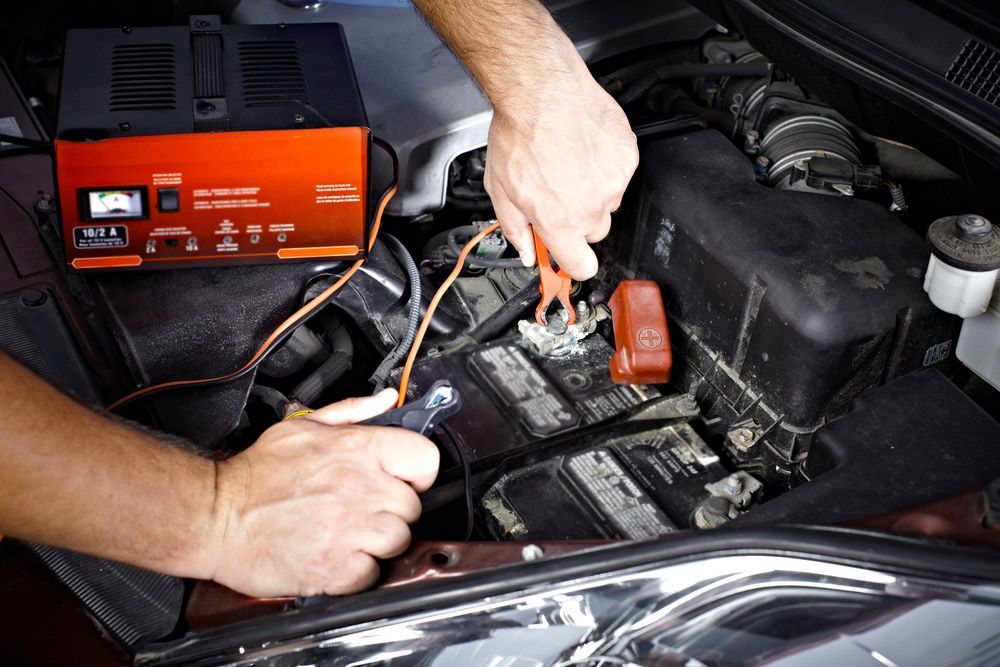
A proper diagnosis isn't guesswork. An auto electrician in Albury uses a multimeter and load tester to measure the battery's actual condition, test the alternator's output while the engine is running and check for current draw with the ignition off. That's the difference between replacing a part based on a hunch and knowing exactly what's causing the problem.
When Should I Replace My Car Battery or Get It Checked by a Mechanic?
As a general guide, get your battery checked if it's three years or older, if you've had to jump-start the car more than once in the past month, or if you notice slower cranking when you turn the key – even if the car eventually starts.
Book a proper diagnostic with an auto electrician if:
- The car has needed jump-starting more than once
- The dashboard battery light has come on while driving
- You've replaced the battery recently but the problem hasn't gone away
- Electrical accessories (lights, indicators, infotainment) are behaving inconsistently
- The battery is flat again within a day or two of being fully charged
That last point is particularly important. Replacing a battery when the real fault is a failing alternator or a parasitic drain means you'll be back to square one within weeks – and possibly stranded somewhere less convenient than your driveway.
Getting a Flat Battery Sorted for Good
A flat battery is frustrating, but it's rarely a mystery once someone properly checks the battery, the alternator and the wiring. Lavington Auto Electrical provides mobile auto electrician services across Albury, bringing diagnostic equipment directly to your home or workplace to test the battery, alternator and electrical system on the spot – no towing required.
If you're dealing with a battery that keeps going flat, call Lavington Auto Electrical to book a mobile diagnostic in Albury and get to the bottom of it before it leaves you stranded.
Frequently Asked Questions